The Best User Experience Starts at Home
For years, my job was designing, and later configuring, software.
I worked with business leaders to understand their goals, then helped build systems that made it easier for people to make good decisions. We didn't overwhelm users with endless options. We carefully considered what they actually needed and designed an experience that guided them toward success.
Somehow, it never occurred to me that I could do the same thing for my own life.
At work, we would never design a screen with fifty equally good buttons and expect users to feel confident. We'd call that poor user experience.
Yet that's exactly how many of us design our homes.
Fifty shirts.
Twenty coffee mugs.
Three drawers full of kitchen gadgets.
A pantry overflowing with snacks.
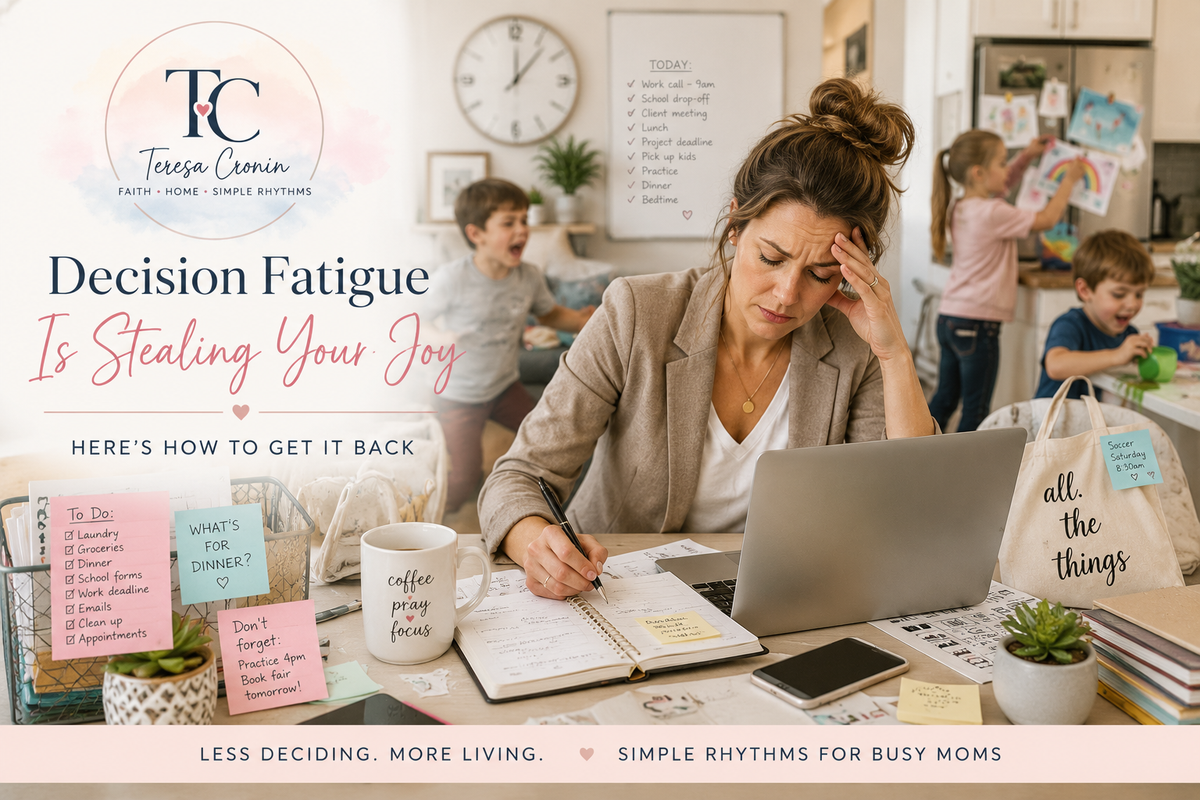
Hundreds of tiny decisions waiting for us every single day.
Then we wonder why we're mentally exhausted.
One day I realized that I didn't need more choices.
I needed better defaults.
I don't need fifty outfits. I need ten outfits that I genuinely love wearing.
I don't need a pantry full of "maybe someday" ingredients. I need foods that I know my family will actually eat.
I don't need shelves full of office supplies I'll never use. I need the tools that help me do my work well.
I've started asking myself a different question:
If I reached in without thinking, would I still end up with a good choice?
That's become my measure for almost everything in my home.
When I open my closet, every outfit should be one I'd happily wear.
When I open my pantry, every option should be something I'd feel good about serving my family.
When I sit down at my desk, everything within reach should support the work I actually do—not distract me from it.
I've realized that organization isn't really about putting things in prettier containers.
It's about reducing friction.
It's about removing poor choices until almost every remaining choice is a good one.
That's exactly what we did in software design.
And now, it's exactly what I'm trying to do at home.
Maybe the goal isn't to have more options.
Maybe the goal is to curate your life so well that almost every option is a good one.
Because when every remaining possibility is a good possibility, the decision almost makes itself.
And that leaves you with more energy for the people and the purpose that matter most.